
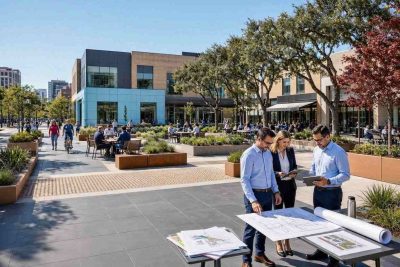
 Every community reflects the decisions made by homeowners, businesses, developers, and local governments. Roads, parks, schools, commercial precincts, residential estates, and public facilities all contribute to how people experience a neighbourhood. While architecture often attracts the most attention, one equally important element quietly influences daily life: landscape design. Thoughtfully planned outdoor environments create spaces that encourage social interaction, improve public wellbeing, support local businesses, and strengthen a community’s long-term identity.
Landscape design is far more than selecting plants or arranging decorative features. It is a multidisciplinary profession that combines environmental science, engineering, horticulture, urban planning, architecture, and construction to create outdoor environments that are both attractive and functional. Every pathway, retaining wall, tree, lawn, garden bed, drainage system, and recreational area is carefully planned to achieve specific objectives while complementing the surrounding built environment.
As Australian cities continue to expand, councils and developers increasingly recognise that high-quality landscapes contribute directly to economic growth and improved liveability. Attractive public spaces encourage tourism, support retail activity, increase property values, and create healthier communities. Whether the project involves a residential backyard, a corporate headquarters, a shopping precinct, or a public park, successful landscape design balances aesthetics, accessibility, environmental sustainability, and long-term maintenance.
Businesses also understand the value of investing in professionally designed outdoor environments. Customers naturally form opinions before entering a building, and the appearance of surrounding landscapes significantly influences those impressions. Attractive gardens, shaded walkways, welcoming entrances, and thoughtfully designed outdoor seating areas help businesses create positive customer experiences while reinforcing their brand image.
For governments, landscape design represents an investment in public infrastructure. Parks, playgrounds, recreational reserves, civic plazas, and landscaped streetscapes provide residents with places to gather, exercise, relax, and participate in community events. These spaces encourage stronger social connections while helping neighbourhoods develop a distinct character that residents are proud to call home.
Landscape Design Supports Economic Growth and Better Communities
Well-designed outdoor spaces generate benefits that extend far beyond visual appeal. Numerous studies have shown that attractive environments encourage people to spend more time within commercial districts, increasing customer engagement and supporting local businesses. Retail centres featuring landscaped courtyards, tree-lined pathways, comfortable seating, and shaded gathering areas often experience higher visitor satisfaction than developments focused solely on buildings and parking facilities.
Hospitality businesses benefit particularly from quality landscape design. Restaurants with landscaped outdoor dining areas create more inviting experiences for customers, while hotels with gardens, water features, and recreational spaces often command stronger occupancy rates. Even office developments increasingly include landscaped terraces and communal outdoor areas because businesses recognise the positive effect these spaces have on staff wellbeing and productivity.
Residential developments experience similar advantages. Homebuyers frequently prioritise neighbourhoods featuring mature trees, open green spaces, attractive streetscapes, and recreational facilities. These elements contribute to higher property values while encouraging long-term investment from homeowners who value attractive surroundings and accessible outdoor amenities.
Developers understand that landscape design adds market value to residential communities by creating cohesive neighbourhood identities. Walking paths, playgrounds, community gardens, and green corridors provide residents with opportunities to exercise, socialise, and enjoy nature without travelling far from home. These shared amenities often become defining features that distinguish one development from another.
Local governments also recognise landscape design as an important component of urban planning. Parks, sporting facilities, public gardens, cycling paths, and waterfront promenades encourage outdoor recreation while promoting healthier lifestyles. Accessible public spaces accommodate people of all ages and abilities, creating inclusive environments where communities can gather throughout the year.
Well-planned landscapes also improve safety. Proper lighting, open sightlines, strategically placed vegetation, and clearly defined pedestrian pathways contribute to safer public spaces while encouraging greater use during both daytime and evening hours. Good landscape design considers how people move through an environment, reducing potential hazards while improving accessibility for individuals with mobility challenges.
The environmental benefits are equally significant. Modern landscape design increasingly incorporates sustainable practices that minimise resource consumption while protecting natural ecosystems. Native plant species require less irrigation, fertiliser, and maintenance than introduced varieties, making them ideal choices for Australian conditions. Rain gardens filter stormwater runoff before it enters waterways, while permeable paving reduces flooding by allowing water to soak naturally into the ground.
Urban tree planting provides another valuable contribution. Trees reduce surface temperatures, improve air quality, provide shade during Australia’s hot summers, and create habitats for native wildlife. Green infrastructure helps combat the urban heat island effect, making cities more comfortable and resilient as temperatures continue to rise.
Businesses increasingly incorporate sustainability into their outdoor developments as customers become more environmentally conscious. Green walls, rooftop gardens, water-sensitive landscaping, and energy-efficient irrigation systems demonstrate environmental responsibility while reducing operational costs over time. Sustainable landscapes can also contribute toward green building certifications that enhance a company’s reputation.
The landscaping industry itself supports substantial economic activity across Australia. Landscape architects, designers, horticulturists, surveyors, irrigation specialists, arborists, civil engineers, construction contractors, nursery suppliers, equipment manufacturers, and maintenance professionals all contribute to delivering successful projects. Their combined expertise creates employment opportunities while driving innovation across multiple industries connected to planning, construction, and environmental management.
Collaboration Creates Landscapes That Deliver Lasting Value
Every successful landscape project begins with thorough planning and site analysis. Designers evaluate soil quality, drainage conditions, topography, climate, sunlight exposure, existing vegetation, surrounding infrastructure, accessibility requirements, and future land use before developing concepts. Understanding these factors ensures the final design performs effectively under real-world conditions rather than focusing solely on appearance.
Early collaboration between stakeholders significantly improves project outcomes. Property owners, developers, architects, engineers, surveyors, local councils, environmental consultants, and construction teams each contribute specialised knowledge that influences the final design. Open communication helps identify potential challenges early while ensuring the finished landscape satisfies regulatory requirements, budget constraints, and long-term operational needs.
Landscape design also plays an important role in infrastructure projects. Roads, bridges, schools, hospitals, transport hubs, and commercial developments all require surrounding landscapes that improve functionality while softening the visual impact of large-scale construction. Strategic planting, retaining walls, public seating, and pedestrian pathways help integrate infrastructure into surrounding communities more successfully.
Material selection represents another critical stage of the design process. Durable paving materials, sustainably sourced timber, natural stone, corrosion-resistant steel, and high-quality irrigation systems provide long-lasting performance while reducing maintenance requirements. Selecting materials suited to local environmental conditions helps ensure landscapes remain attractive despite Australia’s varying climate conditions.
Plant selection requires similar consideration. Native species generally provide greater resilience to drought, pests, and local weather while supporting biodiversity through habitat creation for birds, insects, and other wildlife. Seasonal variation is also considered so landscapes maintain visual interest throughout the year rather than only during a single growing season.
Maintenance planning is equally important because every landscape continues evolving long after construction finishes. Professional landscape designers prepare maintenance strategies covering irrigation management, pruning schedules, fertilisation, weed control, seasonal planting, pest management, drainage inspections, and infrastructure maintenance. Preventive maintenance preserves both appearance and functionality while extending the lifespan of outdoor assets.
Businesses particularly benefit from structured maintenance programs because consistent presentation reinforces professionalism. A neglected landscape quickly creates negative impressions regardless of how attractive the original design may have been. Regular care protects investment while ensuring customers, employees, and visitors continue enjoying clean, welcoming environments.
Technology continues transforming landscape design across every stage of project delivery. Three-dimensional modelling software allows designers to visualise concepts before construction begins, helping clients understand how completed projects will appear. Drone surveys provide highly accurate site information, while geographic information systems improve planning for large-scale developments. Smart irrigation controllers automatically adjust watering schedules based on weather conditions, reducing water waste while maintaining healthy landscapes.
Artificial intelligence and data-driven planning are also beginning to influence urban landscape management. Councils can monitor tree health, irrigation performance, and maintenance requirements more efficiently using digital tools that support evidence-based decision-making. These innovations improve operational efficiency while reducing environmental impacts and long-term maintenance costs.
Community consultation has become another valuable component of landscape planning. Residents often provide insights into how public spaces are used, helping designers create facilities that better reflect local needs. Inclusive planning encourages stronger community ownership, leading to greater appreciation and care for shared public assets after project completion.
 Businesses often need to move their operations or employees to new locations. This can be due to various reasons such as seeking better markets, accessing skilled labor, or even political climates that are more favorable for business operations. Here, relocation services like the best NYC to Greenwich CT movers play a critical role in helping businesses make these moves smoothly and efficiently.
 In today’s rapidly changing world, businesses and political leaders are constantly seeking new ways to stay competitive and relevant. One area that has gained significant attention in recent years is the car hire in Darwin, which is playing a vital role in revitalizing both business and politics.